

Bringing Clarity to the OSS-Powered Smart Grid
An interview with Tony Kalcina, CEO of Clarity International
Energy is in the crossfire of mighty political forces. On the one side are the Jetsons, those clean and efficient fashionistas who one day hope to whiz around the metropolis in mini-flying saucers powered by carbon neutral fuel cells.
Then there are the residents of California and other electric-power-starved nations where frequent brownouts have turned "energy" into a huge quality of life issue.
But no matter where you sit in the energy debate, you will certainly be affected by smart grids.
Power Industry Transformation
Smart grids are the power industry equivalent of telecom's transformation from good-old-boy POTS club to today's broadband, everybody's invited, never-sleep, rock and roll party.
Telecoms were forced to evolve into a distributed, interconnect model due to deregulation and the rise of the intelligent network. The power industry now seems to be following that same course.
All told, industry experts expect a few trillion dollars will be invested to reengineer the power industry for the grids that will enable and coordinate all those electric cars, wind farms and solar energy fields we've been hearing about.
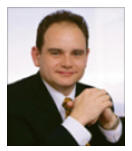 To find out what all this smart grid nonsense is about we contacted
Tony Kalcina, founder, chief product officer and chief evangelist
of Clarity International in Australia.
To find out what all this smart grid nonsense is about we contacted
Tony Kalcina, founder, chief product officer and chief evangelist
of Clarity International in Australia.
As far as we can tell, Kalcina's interests in the smart grid are strictly apolitical. But when Kalcina dreams of the smart grid, he does see "green." Except that it's the monetary type of green - dollar bills, or the Down Under version of the same.
In fact, Kalcina believes OSS software will supply a lot of the "smarts" for the smart grid, which is precisely why we at TRI wanted to talk to him:
"Smart Grid" Defined
Dan Baker: The term "smart grid" has crept into our vocabulary, Tony, but I'm not quite sure what it is precisely. Can you help define it for us?
Tony Kalcina: When you hear the term "smart grid," the first thing that comes to mind is offering electric power customers flexible billing rates and incentives to promote efficient energy use. But that's a relatively easy issue to solve. The hard part is actually controlling electricity flow and managing the generating capacity.
Here's the key problem: The power industry invests billions of dollars a year in infrastructure just to be ready for those few peak days a year when the power consumption spikes up and most brownouts occur. You know the time periods I'm talking about. It's 5 p.m. on the hottest day of the summer. Dad and Mom are home from work and the electric grill, air conditioner, television and electric car charging in the garage are all sucking up power like there's no tomorrow.
The solution? The power industry believes the answer is to evolve toward a highly distributed power generation system - the grid. Not only will the number of power-producing companies explode, but consumers themselves will own highly efficient micro-generators and sell their surplus back to the grid.
OSS for the Power Industry?
TRI: It's highly interesting, but exactly how can OSS software benefit the power industry?
TK: First off, every house will have a smart meter. And you'll have the means to put your critical power on one circuit and less critical power on another. Then there will be discretionary circuits for convenience uses and those will be the circuits that the power industry may need to shut down in an emergency. This is pretty exciting stuff, but it all requires management.
So when you look at the software components the power industry needs, they are the same building blocks that OSS providers have supplied for 25 years: strong visualization, data correlation/analytics, mediation and topology management.
TRI: How are you positioning Clarity software to take advantage of the opportunity?
TK: Basically it's a matter of hitting the same sweet spots that telecoms have been attracted to: investing in operational systems that help retain customers.
Telecoms have never really warmed to the idea of buying OSS for efficiency's sake alone. But if you show board-level execs how investing in OSS can retain customers, they think you're brilliant.
When a bank loses its telecom service, the telco needs to instantly understand why the frame relay service went down and correct the problem. But given the fragmented nature of how OSS solutions are sold and delivered, provisioning, trouble ticketing, and assurance don't synchronize well - and that causes massive customer relations problems for telcos.
Over the years, that's the chief issue Clarity's been hired to solve - marrying network behavior with the customer experience. We aim to take that same philosophy into the smart grid business.
Now to be honest, the smart grid is very much in its infancy. People are still trying to define what smart grid means and every power company has its own interpretation.
But it's the perfect time for us to get involved in pilot projects so when something does break, we'll be in a good position to become a critical supplier. At the moment we're working quite closely with Western Power here in Australia. Western Power is using Hansen Technologies' billing system for their pilot and we're eager to figure out where we can serve them on the OSS side.
From TeleManagement to Operational Management
TRI: If the OSS industry moves sideways into the power industry as you predict, it's going to shake up a lot of company business models.
TK: True, but it's nothing that new, really. It's merely approaching operational problems from another industry's viewpoint. OSS is a cross-industry phenomenon.
I'd love it if the TM Forum would substitute "Operational" for the "Tele" in TeleManagement Forum. I like the moniker "Operational Management Forum" because that's where we're headed - toward unified operational management.
Look at the history of ERP software, for example. Only a short time ago, every industry had its own way of managing their finance, human resources and corporate planning functions. Then companies like SAP came along with the concept of a generic, cross-industry ERP suite, and that idea really took off.
Operational management will evolve in a similar fashion. And by the way, OSS can even be applied beyond telecom and electric power. Consider smart transportation and intelligent highways, for example. Probes will be used to monitor and control the flow of traffic on highways; real-time behavior and topology analysis will be at the core of smart highways.
Bottom line, OSS is - and will continue to be - at the forefront of automating mass society.
About Tony Kalcina
Tony Kalcina is responsible for helping formulate Clarity's strategic direction and guiding the company's resources to deliver on that vision. Tony has 30 years experience in the global telecoms industry.
His career includes 10 years at Telstra (OTC) where he started as an R&D Engineer and later held senior roles in Operations, Engineering and IT. Within Telstra he created and led an award winning 80 member operational support systems (OSS) development team. Tony then spent 3 years as an expatriate, initially as GM of IT in a newly established Malaysian telecoms company, and then as the founding CEO of a Malaysian IT company delivering BSS and OSS solutions, growing the business to annual revenues of $90 million.
As Founder of Clarity, Tony conceived the Unified Operational Management vision, and led the company as its CEO for its first 10 years of operations - raising capital, growing the company to over 180 staff worldwide with annual revenues of $45m, taking Clarity public on the ASX in 2000 and merging with Powerlan in 2002. A fervent evangelist for Unified OSS, Tony is now Chief Product Officer for Clarity. Tony has a BE (Electrical Engineering) and BSc (Hons) in Computer Science and Physics from the University of Sydney.